


If you're within a few years of retirement, let me ask you a question.
What would you do if the next bear market began just as you collected your final paycheck?
I'm not talking about a sharp correction like the COVID selloff. I'm talking about the kind of downturn that can change the face of your retirement — like the inflation-driven bear market of the 1970s, the dot-com crash, or the financial crisis of 2008.
During the dot-com crash, the U.S. stock market lost 57% and didn't fully recover until 2013.
thirteen years. that's not a typo.
If you're 40, that's frustrating. If you're 65, it's downright scary.
I know, because I watched it happen to my father.
When Time Is No Longer On Your Side
My dad did everything financial planners recommended. He faithfully contributed to his retirement accounts, stayed diversified, invested for the long term, resisted chasing the latest market fads, and by retirement had built a nest egg of about $1 million.
Then the dot-com bubble burst the year he retired.
Within months, he had lost over 50% of his retirement account, so he moved everything to cash just to stop the bleeding.
The retirement he and my mom had spent decades planning changed overnight. Even though he still had a pension and Social Security, he spent the rest of his life worrying whether their savings would last.
Back then, I was in my early thirties, and honestly, I didn't give it much thought. Like most people my age, I figured time was on my side.
Now, with retirement just around the corner, I can't stop wondering —
What if history repeats itself — and this time I'm the one who's retiring?
"My biggest worry over the last few years is a prolonged bear market in early retirement... it could get much worse, and then I may never be able to retire."
That really hit home, because my dad had something that many of us won't.
He had a pension. I don't.
what i've saved is all i've got.
It has to last the rest of my life. And if a prolonged bear market hits at the wrong time, there isn't another paycheck — or a guaranteed pension — to make up the difference.
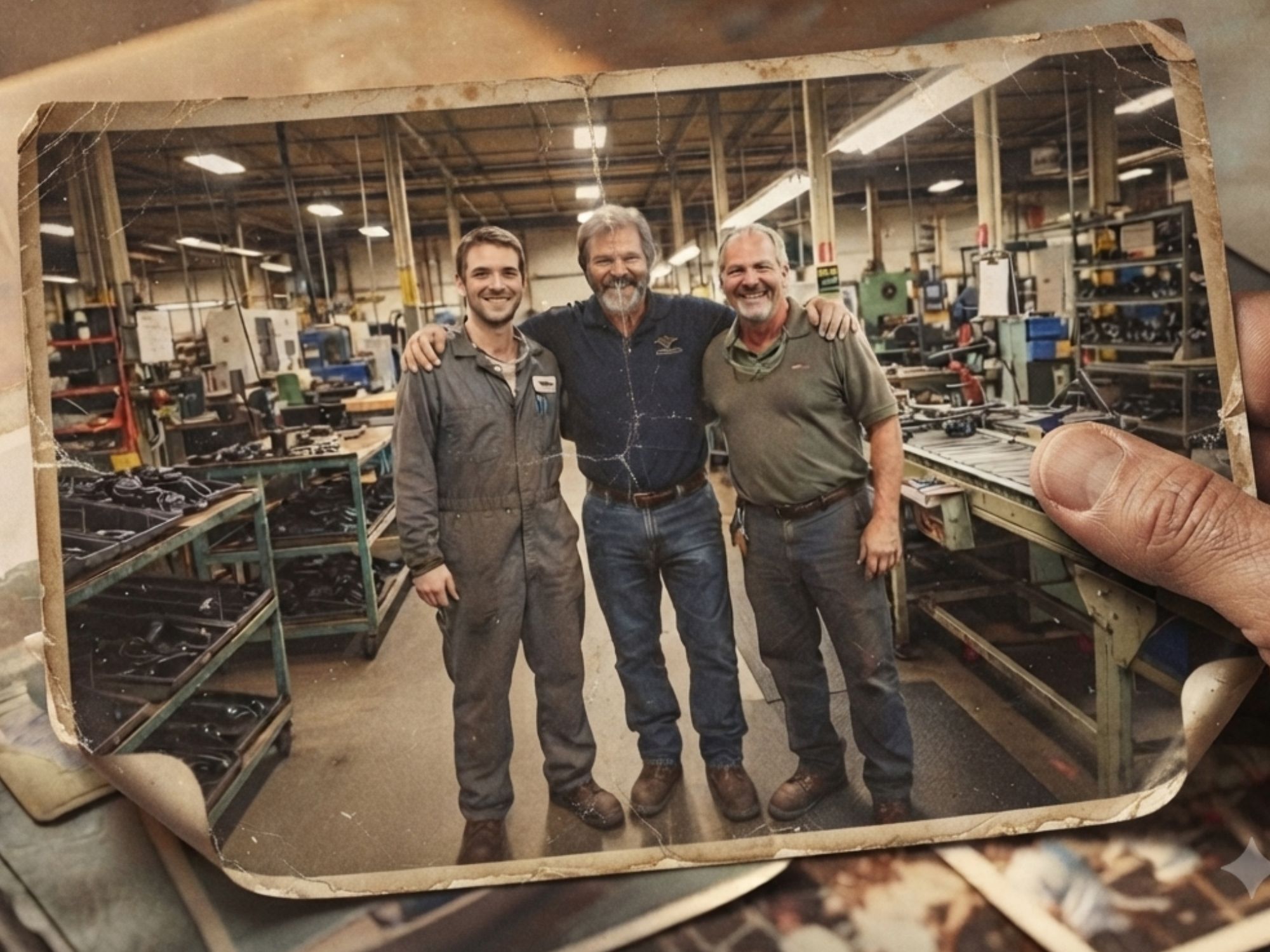
my dad, his final year at the plant
A Different Way of Thinking
No one — not your financial advisor, your neighbor, or the experts on TV — can tell you when the next bear market will begin.
And when it comes, you can hope it's over quickly. Or you can prepare for it before it happens.
Not by trying to predict the next crash, but by building a portfolio that doesn't depend on just the stock market.
The closer retirement got, the less I cared about the biggest returns — and the more I worried about protecting what I had already saved.
So I started looking for answers.
One idea kept coming up. Many retirees weren't relying entirely on stocks and mutual funds. They had diversified a portion of their retirement savings with physical gold.
Not just gold coins in a safe. Or stacks of bullion in the garage. Instead, many were holding gold inside an IRS-approved retirement account — a Gold IRA.
Two Assets, One Crisis
The dot-com crash, and the 13 years it took stocks to recover
Why Would Anyone Own Gold?
I can almost hear your response. "Really, gold? Why the heck would anyone buy gold?"
That was my reaction, too. Isn't gold just for survivalists waiting for the end of the world?
But the more I researched, the more I realized gold wasn't some fringe investment idea after all. Some of the world's most successful investors and central banks were buying record amounts of gold.
the ones i'm doing this for
"I keep roughly 5% of my portfolio in gold. Not to get rich — as insurance." — Kevin O'Leary, on his own gold allocation
Think about that for a moment. You don't buy insurance expecting to use it — but you're glad it's there if you ever do.
the dot-com crash
In fact, the World Gold Council analyzed every major financial crisis since 1987 and found that gold delivered positive returns during nearly every major market selloff.
So maybe the real question isn't, "Why would anyone own gold?" Maybe it's, "Why have so many experienced investors owned it for years?"
Thinking back on everything my father went through, I realized I needed to understand all my options if I was going to protect my retirement. So I decided to learn everything I could about Gold IRAs.
I often wonder whether a Gold IRA could have helped my dad. The truth is, it's hard to know — Gold IRAs had only recently become available in 1997, and there simply wasn't a lot of information available back then.
Today, it's almost the opposite. Once you start looking, information is everywhere — articles, videos, podcasts, expert opinions, all pointing in different directions. After a while, I realized I wasn't getting anywhere. I was just collecting more opinions than answers.
the challenge wasn't finding info — it was knowing what to trust.
And the last thing I wanted was another sales pitch. Just give me the facts and honest answers. I'll make my own decision, thank you.
What I needed was a place to start — something that explained my options without assuming I was ready to open a Gold IRA. That's when I came across Augusta Precious Metals' free Gold IRA Guide. But before I downloaded it, I did what I always do: I checked out what others had to say about them.